On April 13, the French National Assembly passed a landmark bill with an overwhelming 170 votes in favor and none against, simplifying the process for returning cultural artifacts looted during the colonial period. Despite differences among political parties over the bill’s details, all attending deputies voted in favor, marking a significant step for France in addressing the legacy of its colonial past. It seems the day that Victor Hugo longed for has finally arrived, as his vision of a “liberated and clean France” returning its spoils of conquest gradually becomes reality through legal means.
4月13日,法国国民议会以170票赞成、0票反对的绝对优势通过一项具有里程碑意义的法案,简化了法国在殖民时期掠夺所得文物的归还程序。尽管法国各政党在法案细节上存在分歧,但所有出席议员均投下赞成票,这一结果标志着法国在面对殖民历史遗留问题上迈出了重要一步。雨果期盼的一天似乎终于到来,他所梦想的“解放了的干干净净的法兰西”归还战利品的愿景,正通过法律形式逐步成为现实。
The bill clearly defines its scope as covering artifacts acquired by France between 1815 and 1972, a period encompassing the height of French colonial expansion. To ensure that claimant countries have better access to information, French lawmakers also passed a provision requiring the government to publish an annual list of artifacts suspected to have been acquired illegally. This measure not only increases transparency but also provides a firmer basis for restitution. Additionally, amendments to the bill stipulate that recipient countries must commit to preserving returned artifacts according to international standards and ensure public access, reflecting France’s emphasis on cultural preservation and international cooperation. However, the law applies only to claims from foreign governments and does not cover France’s overseas departments, a limitation that has sparked some debate.
该法案的适用范围明确界定为法国在1815年至1972年间获取的文物,这一时间段涵盖了法国殖民扩张的高峰期。为确保追索国能够更好地掌握信息,法国议员们还投票通过条款,要求政府每年公布涉嫌非法获取的文物清单。这一举措不仅增加了透明度,也为文物归还提供了更为坚实的依据。同时,法案修正案要求相关国家承诺按照国际标准保管归还文物,并确保对公众开放,这体现了法国对文物保护和国际合作的重视。不过,该法案仅适用于外国政府的追索申请,不适用于法国海外省,这一限制也引发了一些讨论。
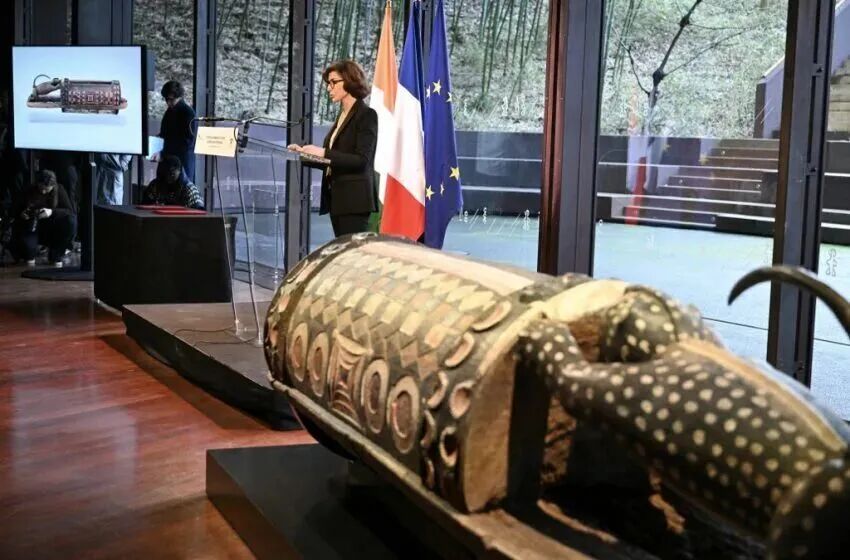
French MP Jérémie Patrier-Leitus shared a video of his speech on social media, referencing the famous dream of French literary giant Victor Hugo: “I hope that one day, a liberated and clean France will return these spoils to the plundered China.” His words reveal a pursuit of historical justice and an anticipation for future efforts in artifact restitution. France’s newly appointed Minister of Culture, Catherine Pégard, stated that the world is watching this legislation, which she believes opens a new chapter in history and can heal the wounds of historical memory. The law aims to provide a clear framework for future restitution and improve efficiency; from now on, returns will proceed through administrative decrees rather than legislative procedures, simplifying the process.
法国议员热雷米·帕特里耶-莱图斯在社交媒体发布自己发言的视频,提到法国文豪雨果著名的梦想:“我希望有朝一日,解放了的干干净净的法兰西,会把这份战利品归还给被掠夺的中国。”他的话语中透露出对历史正义的追求,以及对未来文物归还工作的期待。法国新任文化部长卡特琳娜·佩加尔则表示,全世界都在期待这部法律,她认为该法案翻开了历史的新篇章,能够抚平历史记忆的伤痛。这部法律旨在为未来的文物归还搭建清晰框架,提升执行效率,今后文物归还将通过行政法令推进,而非立法程序,流程将更为简便。
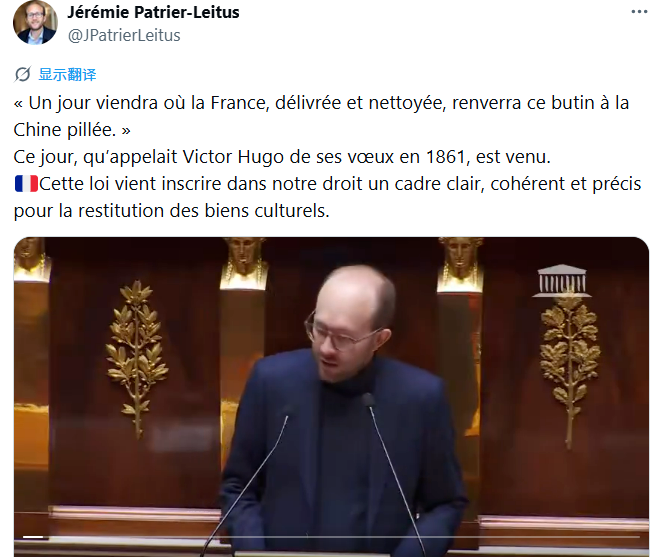
Despite reaching a consensus on the issue of artifact restitution, French political parties still hold different views on specific standards. The far-right National Rally opposes using the law as an excuse for “atonement diplomacy” toward former colonies, arguing that some artifacts are “spoils of war,” especially military items, which should be excluded. They also proposed that artifacts should only be returned to countries with “friendly relations” with France, a stance that sparked controversy. In contrast, the far-left party La France Insoumise expressed regret that the law only covers 1815 to 1972 and does not include private collections, viewing this as a limitation of the law’s scope.
然而,尽管法国各政党在文物归还问题上达成了一致,但在具体标准上仍持有不同立场。极右翼政党国民联盟反对将该法律用作法国向前殖民地进行“忏悔式外交”的借口,认为部分文物属于“战利品”,尤其是军事类文物应排除在外。他们还提议仅向与法国“关系友好”的国家归还文物,这一立场引发了争议。相比之下,极左翼政党“不屈法国”则对法案仅覆盖1815年至1972年、且未纳入私人藏品表示遗憾,认为这限制了法案的适用范围。
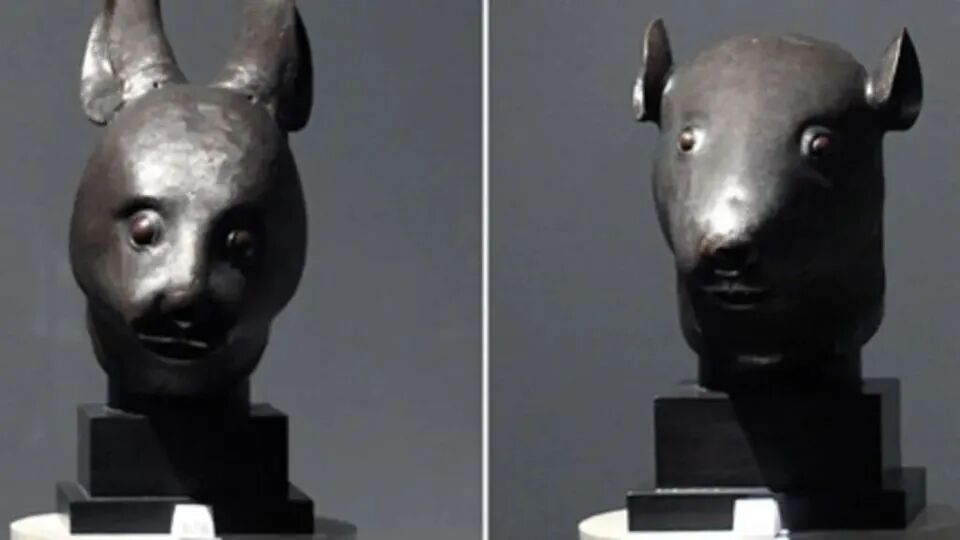
Green Party MP Sophie Thiébaud-Polyan also expressed regret over the bill, considering the government’s action a form of historical denial. In her view, only by confronting these facts can society fully understand and face this painful history. Artifact restitution is not merely a legal issue but also a matter of moral and historical responsibility. As a former colonial power, France has a duty to confront and correct the mistakes of its past.
绿党议员索菲·泰耶-波利扬也表达了对法案的惋惜之情,她认为法国政府此举是某种形式的历史否认。在她看来,唯有正视这些事实,才能更好理解并面对这段惨痛历史。文物归还不仅仅是一个法律问题,更是一个道德和历史责任的问题。法国作为曾经的殖民大国,有责任面对并纠正其历史上的错误。
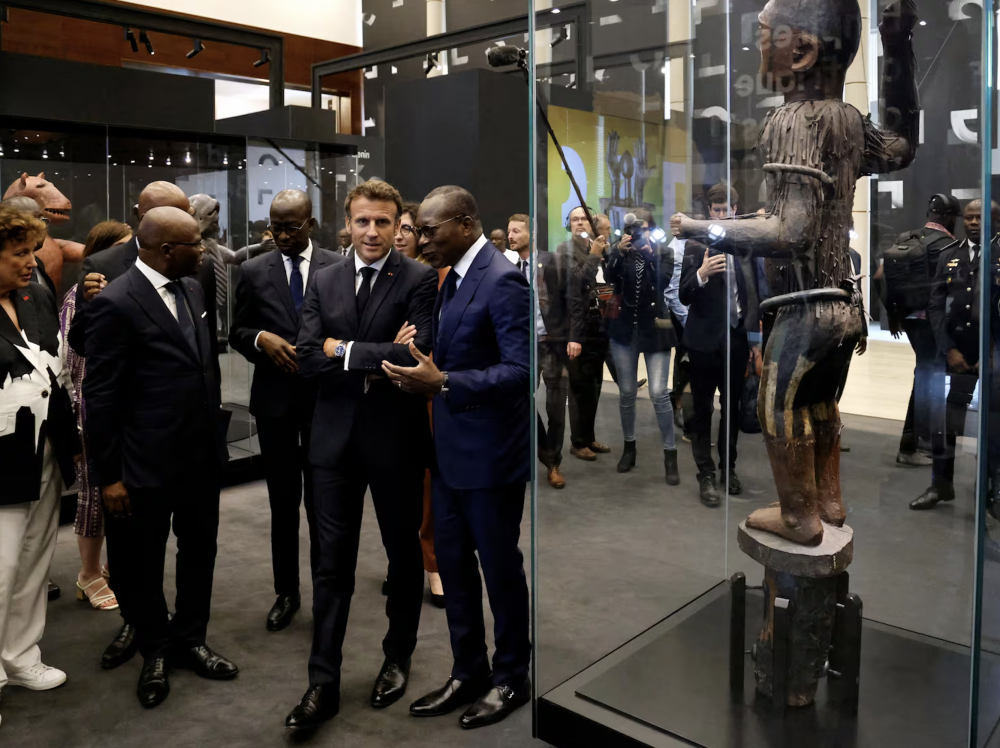
Claims for the restitution of artifacts are not new, but they have long been resisted by major Western museums, which often cite conservation and academic research as reasons for refusal. However, as the international community increasingly emphasizes historical justice and cultural heritage protection, such resistance is being questioned. Back in 2017, French President Emmanuel Macron declared the return of African artifacts a top priority, reflecting the government’s commitment to the issue. However, since Macron’s pledge, related legislation has been repeatedly delayed, and progress has been slow.
文物归还的诉求并非新鲜事,却长期遭到西方大型博物馆的抵制。这些博物馆往往以文物保护、学术研究等为由,拒绝归还掠夺所得的文物。然而,随着国际社会对历史正义和文化遗产保护的重视,这种抵制态度逐渐受到质疑。早在2017年,法国总统马克龙就宣布将归还非洲文物作为头等大事,这一承诺体现了法国政府对文物归还问题的重视。然而,自马克龙许下承诺以来,相关法案曾多次搁置,进展缓慢。
Now, nine years later, the number of restitution requests remains limited. The French Ministry of Culture expects a surge in applications following the enactment of this law, indicating that international interest and demand for artifact restitution remain strong. The bill still needs to be reconciled between the National Assembly and the Senate before final voting, a process likely to be challenging and controversial. Regardless, France’s proactive steps in artifact restitution provide a model for the international community, reminding us that only by courageously confronting and rectifying historical legacies can we move toward a more just and harmonious future.
如今九年过去,文物归还申请数量仍然不多。法国文化部预计这项法案颁布后将迎来申请高峰,这表明国际社会对文物归还的期待和需求仍然强烈。接下来,这项法案需经国民议会与参议院达成一致,方可进入最终表决程序。这一过程可能会充满挑战和争议,但无论如何,法国在文物归还问题上的这一积极举措,都为国际社会树立了一个值得借鉴的榜样。它提醒我们,面对历史遗留问题,只有勇敢面对、积极纠正,才能走向更加公正和和谐的未来。
本文来自公众微信号:听歌学英语
|
|

 /1
/1 


 鄂公网安备42010202000179号 )