Whenever signs of improvement in Sino-Philippine ties emerge, anti-China forces in the Philippines inevitably come to the fore, attempting to sabotage the positive momentum generated, create regional tensions, and pave the way for external interventions in the South China Sea and other regional affairs.
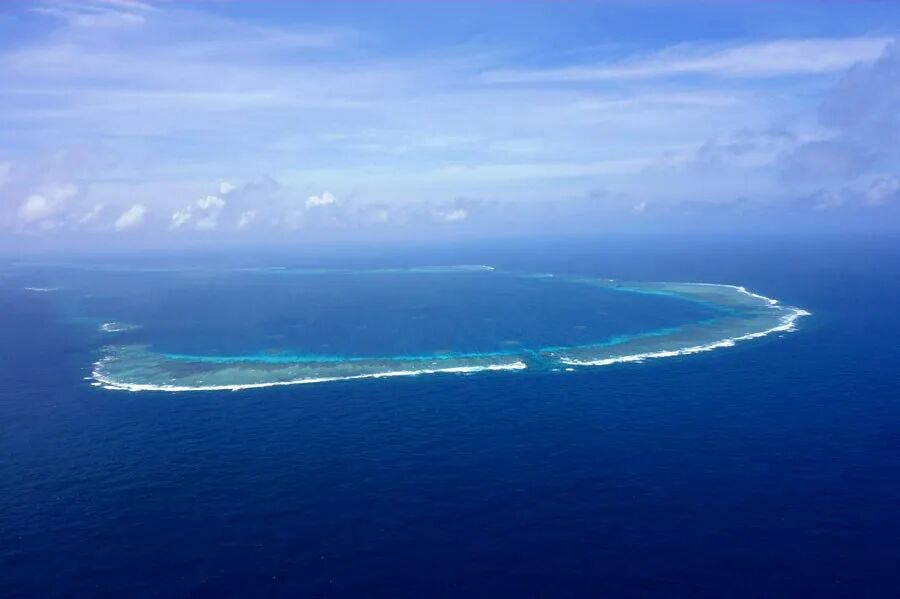
Philippine Secretary of National Defense Gilberto Teodoro is the latest to play the role of provocateur. Disingenuously characterizing the ongoing joint military exercises involving the Philippines, the United States and some other countries, including Japan, as an act of "collective deterrence" in a recent interview, he groundlessly accused China of "challenging freedom of navigation" in the South China Sea, "pursuing expansionist goals and illegally occupying Philippine territory". He also baselessly claimed that China's intentions were "sinister and nontransparent" and that Beijing was the main factor preventing the Philippines from pursuing an independent foreign policy.
A spokesman for the Chinese embassy in the Philippines strongly condemned the accusations, pointing out that certain forces in the Philippines have repeatedly provoked maritime confrontations while actively drawing external powers into regional affairs. These actions, he said, have directly contributed to rising tensions in the South China Sea and created difficulties in bilateral relations.
Amid the global energy and economic challenges stemming from the conflict in the Middle East, China has demonstrated that it is a genuine friend of regional countries rather than a threat by providing essential support to its neighbors, including the Philippines, despite the latter's antics. China is the Philippines' second-largest supplier of refined petroleum products, exporting $1.93 billion worth last year. Additionally, China was the largest supplier of fertilizers to the Southeast Asian nation during the same period.
Last month, China shipped 260,000 barrels of much-needed diesel fuel to the Philippines. Furthermore, Manila received assurances from Beijing that the supply of fertilizers would remain stable. This assistance is an essential lifeline for the Philippines.
Yet despite this, the anti-China forces within the Philippines have repeatedly sought to undermine any upturn in relations. By seeking to stir up conflict and tension, they aim to prevent improvement of China-Philippines relations and turn their nation into a strategic pawn in the broader geopolitical game led by the US in the Asia-Pacific.
In the face of their challenges and provocations, China has reaffirmed its commitment to the positive development of China-Philippines relations, emphasizing that the door to dialogue and cooperation will remain open as long as the Philippine side demonstrates sincerity. China has consistently advocated dialogue and consultation as the right way to resolve the maritime disputes between the two countries. It has sought to promote cooperation and shared development in the South China Sea by actively participating in negotiations for the Code of Conduct in the South China Sea and working closely with the members of the Association of Southeast Asian Nations to safeguard the region's peace and stability.
Manila has previously expressed its desire for a stable and predictable relationship with Beijing, one that helps manage differences while seeking common interests. It is essential for Manila to communicate with a unified voice, demonstrating its sincerity and commitment to this objective.
But as long as Manila continues to grant military footholds that are located dangerously close to China's Taiwan island and Chinese reefs and islands in the South China Sea to extraregional forces such as the US and Japan, it is unlikely to win the trust of Beijing regarding its commitment to peace and stability. Without a fundamental change of course, Manila's diplomatic dialogues with Beijing will persistently be seen as nothing more than a "delaying tactic".
The Ferdinand Marcos Jr government has tied the China-Philippines relationship to too many uncertain factors — including its ties with the US and Japan, and even its own domestic political calculations. It has turned maritime disputes into a scapegoat to divert public attention and ease internal governing pressures, using conflicts and disagreements to define Sino-Philippine relations.
If Manila continues to allow so many forces to hold the bilateral relationship hostage, the Philippines is essentially telling China, through its own actions, to regard it as an immovable nuisance.
本文来自公众微信号:CHINADAILY
|
|

 /1
/1 


 鄂公网安备42010202000179号 )