Before dawn in Chemedi Payam in South Sudan's Upper Nile State, women and children line up with empty buckets for water that may never arrive.
"We wake up at 3:00 am local time and come here to look for water," said Amna Ibrahim, a Sudanese refugee who fled conflict across the border. "We haven't even had breakfast because we came early to fetch water."
Chemedi, a remote settlement in Upper Nile State, is home to about 58,000 people, most of them Sudanese refugees and returnees. A worsening water crisis is ravaging daily life and straining already fragile basic services.
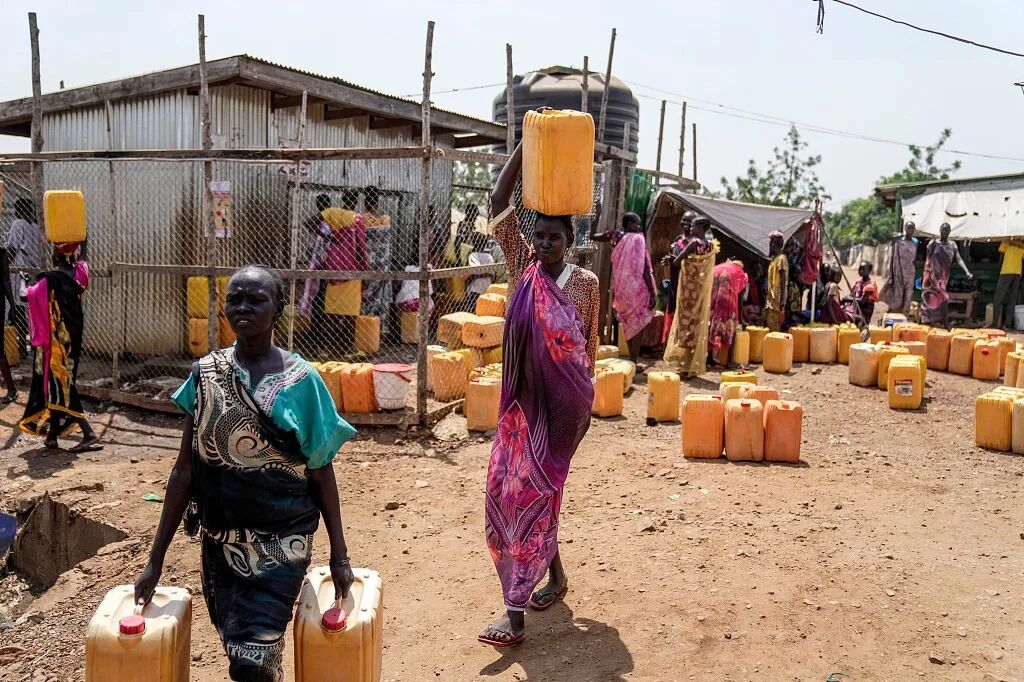
The shortages persist despite the settlement's proximity to the Nile, one of Africa's largest rivers. Aid workers and local officials said the problem is not the absence of water sources, but the lack of infrastructure to safely extract, treat and distribute water to dispersed communities.
With few functioning boreholes, limited storage capacity and no large-scale treatment systems, most residents rely on water trucking or unsafe alternatives. Seasonal water points often dry up during prolonged dry spells.
For many families, access to water depends on tanker deliveries supported by aid agencies, but humanitarian workers warn that these operations are increasingly constrained by funding shortfalls.
"If the tanker doesn't come, we don't know what we will do," Zainab Yasin, another Sudanese refugee, told Xinhua News Agency.
Critical health services
According to local authorities, the rapid influx of people fleeing violence in Sudan has overwhelmed the area's already overstretched water infrastructure. The lack of reliable water supplies is also undermining the delivery of critical health services, particularly for malnourished children and mothers.
At a primary healthcare facility supported by the United Nations Children's Fund and its partners, dozens of children suffering from severe acute malnutrition are treated daily, alongside pregnant and breastfeeding women.
"Water is a major gap in Chemedi. Without it, our nutrition services cannot function properly," said Jansuk Alex Sworo, a nutrition specialist working in the area.
According to Sworo, the absence of sustained funding for water services has left both the facility and the surrounding communities struggling. Aid agencies are trucking in water from Renk, about 80 kilometers from Chemedi, but the approach is difficult to sustain under current financial constraints, he said.
With few alternatives, many residents resort to unsafe sources, such as untreated water from shallow wells or seasonal reservoirs that dry up quickly.
Beyond health impacts, the water crisis is also disrupting education. At a primary school, where most of its 650 pupils are refugees, lessons are frequently cut short. "We have an issue with water here, and that is why we release learners at 11:00 am," head teacher Awadia Paulo Adowk said.
Some parents have stopped sending their children to school altogether because securing water has become a daily struggle. "Sometimes we get water, and after two days, we don't have anything to drink," said Rasham Mohamed Sheikh Al-Din, a mother of eight.
Local officials and aid workers are calling for increased support to address growing water needs.
Source: Xinhua
本文来自公众微信号:CHINADAILY
|
|

 /1
/1 
 鄂公网安备42010202000179号 )
