演讲题目:How do bulletproof vests work?
演讲简介:
截至1975年,理查德·戴维斯被近距离射击了192次。但他不仅安然无恙,甚至每一次射击都是他推销新产品——防弹背心的演示。那么,这样一件轻便、柔韧的衣物是如何阻止子弹的呢?其秘密在于十年前发明的一种合成纤维材料——凯夫拉(kevlar)。
中英文字幕
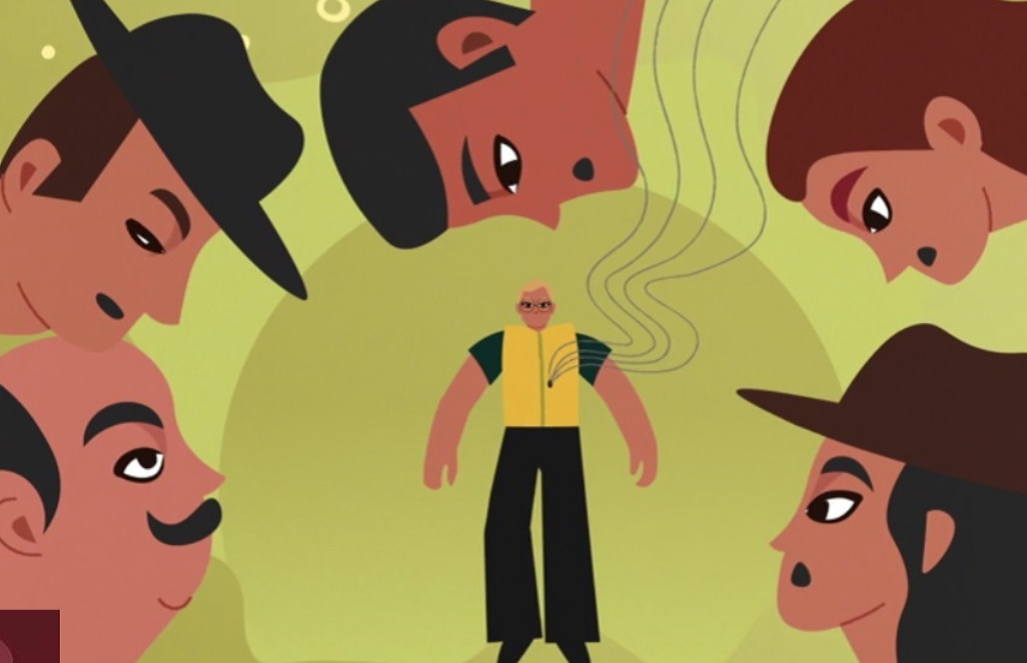
By 1975, Richard Davis had been shot in the chest at close range 192 times.
截至1975年,理查德·戴维斯胸部已被近距离枪击192次。
But not only was he completely healthy, each of these bullets had been shot by Davis himself as part of a demonstration to sell his new product: the bulletproof vest.
但他非但安然无恙,而且每颗子弹都是戴维斯本人射出的,从而通过演示向大家推销其新产品:防弹背心。
Playing with firearms is always a bad idea, but after testing his design on empty vests, Davis became convinced that taking a bullet himself was the only way to prove the vest's efficacy.
摆弄枪支通常是个坏主意,但在对空防弹衣进行测试之后,戴维斯确信,朝自己开枪是证明防弹背心有效的唯一途径。
And when people saw Davis walk away with just some stinging pain a minor cut, they may have stopped questioning his sanity and started wondering how such a light, flexible piece of clothing could stop a bullet.
人们见中枪之后的戴维斯轻松走开,只有轻微刺痛和轻微皮外伤,他们不再怀疑戴维斯的精神状态,而是开始想如此轻便、柔软的衣服是如何挡住子弹的?
The secret was in the material: a synthetic fiber invented a decade earlier by a material chemist named Stephanie Kwolek.
秘密在于防弹衣的材料:一种十年前发明的合成纤维,由材料化学家斯蒂芬妮·克沃勒克发明。
Her employers at DuPont had found huge success with nylon, the world's first synthetic fiber, and they wanted Kwolek to create something even stronger they could use to mass produce durable, lightweight tires.
其雇主杜邦公司在尼龙上获得巨大成功,尼龙是首例合成纤维,他们希望克沃勒克造出更坚固的材料,从而用来批量生产耐用、轻质的轮胎。
Like all synthetic fibers, nylon is a polymer: a long chain of repeating molecules, or monomers.
像所有合成纤维一样,尼龙是一种聚合物,是由重复分子即单体组成的长链。
While some polymers repeat the same monomer over and over, others chain multiple monomers in a steady pattern.
有些聚合物会重复使用相同的单体,另一些则以稳定的模式连接多种单体。
It's these two variables— which molecules are involved and how they bond to one another— that give each polymer its unique properties.
聚合物有两个变量:所包含的分子和分子间的连接方式,正是它们赋予每种聚合物独特的性质。
So, seeking to build on the strengths of nylon, Kwolek began a lengthy process of trial and error, combining various monomers in novel ways.
因此,为在尼龙的基础上继续改进,克沃勒克开始了漫长的反复试验,她用新的方式组合了各种单体。
And one of these resulting polymers was immediately very weird.
由此产生的一种聚合物立刻变得很奇怪。
Named Kevlar, this alternating blend of 1,4- phenylene- diamine and terephthaloyl chloride combine at the molecular level to form a series of parallel chains.
它被命名为凯芙拉,是由 1,4-苯二胺和对苯二甲酰氯交替混合而成的材料,在分子水平上结合形成一系列平行链。
At rest, these chains align in strict rows, giving the polymer order and crystalline strength.
静止时,这些分子链严格排列,为聚合物提供有序结构和结晶强度;
But when pressure is applied, the chains wriggle around, allowing the material to flow like a liquid.
但当施加压力时,分子链会扭动,使材料像液体一样流动。
This so-called liquid crystal polymer was unprecedented, and when Kwolek's team spun the viscous fluid into a fiber, the results were better than they could have hoped.
这种所谓的液晶聚合物前所未有,当克沃勒克团队将粘性流体纺成纤维时,结果比他们预期的更好。
Not only were the fibers flexible and resistant to heat, acid, and various chemicals, when woven together, they were also stronger than steel.
这些纤维不仅柔韧,还耐热、耐酸、耐各种化学物质,而且织在一起时,甚至比钢更坚固。
Metals are incredibly sturdy because of their unique atomic bonds.
金属由于其独特的原子键而非常坚固,
Where non-metal molecules are typically held together by the attraction between a nucleus and a set number of electrons, metal nuclei are surrounded by a sea of shared electrons.
而非金属分子结合在一起通常是通过原子核和一定数量的电子之间的吸引力。金属原子核则被包围在共用电子海中,
It takes a ton of energy to overcome the strength and resiliency of these countless bonds.
要克服这些海量金属键的强度和韧性需要大量的能量。
So when a bullet hits a steel plate, the material can usually absorb all the impact's energy before the metal is pierced.
因此,当子弹击中钢板时,金属材料通常可以在其被击穿之前吸收子弹冲击的所有能量。
Compare this to a bullet hitting wood.
与子弹击中木头的过程相比,
The bonds holding wood together require much less energy to break, which is why bullets can travel much further through wood than metal.
要打破将木头粘在一起的化学键所需能量比金属少得多,故子弹在木头中的穿行距离比金属远很多。
Kevlar's atomic bonds are also weaker than metal's.
凯芙拉的原子结合键也比金属的原子结合键弱,
But it compensates with a huge number of hydrogen bonds.
但是它用大量的氢键来补偿。
While not as strong as the atomic bonds within molecules, the attraction of hydrogen atoms and oxygen atoms between molecules also requires a huge amount of energy to overcome.
虽不如分子内部的原子结合键那么强,但分子间氢原子和氧原子的吸引力也需要大量能量才能克服。
And when threads of Kevlar's polymer chains are woven into fabric, this strength is multiplied.
且当凯芙拉聚合链形成的线织成织物时,强度会成倍增加。
When a bullet hits Kevlar, the mesh of highly aligned, liquid-like chains absorb huge amounts of energy, wiggling wildly while still clinging to their neighboring chains via hydrogen bonds.
当子弹击中凯芙拉时,网状的高度对齐的液体状分子链会吸收大量能量,疯狂地摆动的同时,仍然通过氢键和邻近分子紧紧相连。
And even if a bullet does have enough energy to penetrate the Kevlar, it would be moving considerably slower with much less destructive force.
且即使子弹确有足够能量穿透凯芙拉,子弹的移动速度也会慢得多,破坏力自然要小得多。
Of course, Kevlar is not immune to everything.
当然,凯芙拉也不能防住所有伤害。
Strong forces can still be felt through the fabric, and its fibers gradually lose strength under ultraviolet light.
人体仍能透过防弹衣感受到巨大冲击,凯芙拉纤维在紫外线下会逐渐失去强度。
Additionally, new liquid crystal fibers hold up better against acid.
此外,新液晶纤维抗酸性更好。
But Kwolek's invention remains one of the most versatile and widely used materials on Earth.
但是克沃勒克的发明仍是地球上用途最多、使用最广的材料之一。
Today, companies rely on Kevlar's lightweight impact resistance and durability in helmets, kayaks, spacecraft, and automobiles.
如今,企业将凯芙拉的轻质抗冲击性和耐久性用于头盔、皮艇、航天器和汽车上。
Speakers sometimes use Kevlar because it can push air efficiently and quickly come to a dead stop when you pause your music.
扬声器中有时也会使用凯芙拉,因为它可以高效地推动空气,并在你暂停音乐时迅速停止。
And yes, it also makes excellent tires.
而且没错,它还可以制造出很棒的轮胎。
本文来自公众微信号:英语阅读EnglishDaily
|
|

 /1
/1 


 鄂公网安备42010202000179号 )